
How I Got Here…
How did I get here? I am a conflicted marketing professional. Torn between the creativity, the communication, and the often times heavy-handed objectives.
I didn’t get into marketing because I loved ads. I got into it because I was standing at the edge of something new, and I wanted to understand how people moved when the world changed.
DIRECTV: When Mass Media Still Ruled.
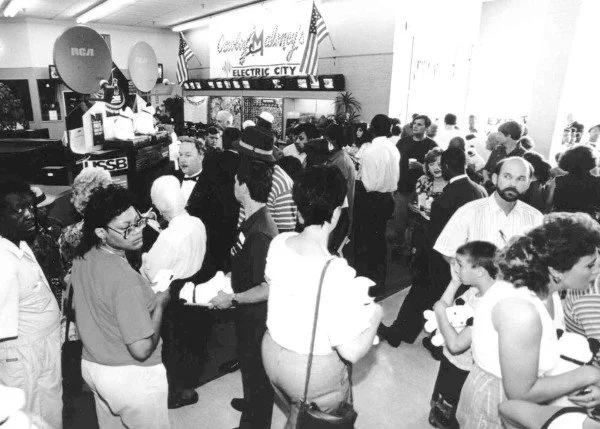
My early years in marketing were shaped in a world that still revolved around big media. At DIRECTV, marketing meant scale. National campaigns. Big budgets. Broadcast thinking. You were trying to reach millions at once and hoping your message landed.
But even then, something didn’t sit right with me.
We could reach everyone, but that didn’t mean we were connecting with anyone. The mechanics were impressive. The emotional connection was often thin. We were pushing messages into living rooms, but we weren’t really being invited in.
What stuck with me wasn’t just the power of media. It was the gap between exposure and meaning. I started noticing that the brands people talked about weren’t always the ones with the biggest media buys. They were the ones who felt like they stood for something.
That question stayed with me as the internet began to change everything.
The First Dot-Com Boom: Autobytel.com and the Digital Frontier.

Then came the late 90s and the first dot-com boom. I landed at Autobytel.com right as the web was exploding into public life.
It was chaos in the best way.
No one really knew the rules. Every company was trying to figure out how to translate real-world behavior into clicks, forms, and page views. We were inventing digital marketing while doing it. Search was primitive. Social didn’t exist. Data was there, but we didn’t yet know how to read it properly.
What fascinated me wasn’t the tech stack. It was the psychology.
For the first time, you could watch behavior in near real time. You could see what people were curious about, what they ignored, where they hesitated. The internet didn’t just give us a new channel. It gave us a window into human intent.
But it also revealed something else: most brands were still thinking like broadcasters in a world that was becoming interactive.
The companies that started to win weren’t just pushing information. They were helping people make decisions, solve problems, and feel more confident. Utility became part of brand. Experience became marketing.
That was a turning point for me. Marketing wasn’t about impressions. It was about reducing friction in people’s lives and earning trust in the process.
E-Commerce Boom #1: Buy.com and the Transaction Era.

Then came the next wave. E-commerce surged, and I found myself at Buy.com during the first real online retail boom.
This was a different energy entirely.
Now the internet wasn’t just about information. It was about transactions. Performance marketing started taking center stage. Conversion rates. Cost per acquisition. Average order value. Dashboards replaced gut feel.
It was exciting and dangerous at the same time.
For the first time, everything could be measured. And when everything can be measured, it’s easy to start believing that only what’s measurable matters. The focus shifted heavily to optimization. How do we get more clicks? More sales? More efficiency?
We got very good at it.
But I also saw how quickly brands could become interchangeable when the entire relationship was built on price, speed, and promotion. If the only reason someone chooses you is because you’re cheaper today, they’ll leave tomorrow when someone else is cheaper than you.
That era cemented a belief for me: performance marketing can drive transactions, but it doesn’t automatically build loyalty. Brand is what makes people come back when the discount is gone.
The Social and Digital Maturity Era.
As digital matured, social platforms emerged, and content became currency, marketing got louder. Everyone had a voice. Every brand had a feed. The barriers to entry dropped, and the competition for attention exploded.
We layered on more tools. More data. More automation. Better targeting. Smarter algorithms.
And yet, the core tension never went away.
We could reach the right person at the right time with the right message. But if the brand behind that message didn’t stand for anything, it still felt hollow. Relevance without meaning is just noise that happens to be well-targeted.
This is where culture, community, and relationships became even more central in my work.
I saw over and over that the brands with staying power weren’t just reacting to trends. They understood the people they served on a deeper level. They saw culture not as a trend report, but as a lived reality. They showed up consistently, not just when there was something to sell.
The Throughline: People, Not Platforms.
Looking back across DIRECTV, the dot-com frontier, early e-commerce, and the social era, the platforms kept changing. The metrics evolved. The tools got more sophisticated.
The human drivers didn’t.
People still want to feel seen. They want to belong. They want to make choices that say something about who they are. The brands that endure help them do that.
That’s why I’ve always been more interested in identity than impressions, in community over campaigns, and in relationships over reach.
Real community isn’t built through funnels alone. It’s built through shared values, consistency, and presence over time. It happens when a brand knows exactly who it’s for and is comfortable not being for everyone.
And relationships, real ones, are still the foundation. Between brands and customers. Founders and audiences. Teams and partners. You cannot automate sincerity. You cannot shortcut credibility. You earn both through alignment between what you say and what you actually do.
Now: AI, Automation, and the Next Shift.
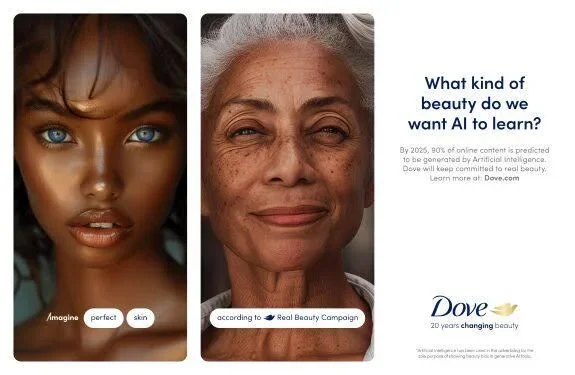
Which brings us to now.
AI and automation are reshaping marketing as dramatically as the internet did in the 90s. Content can be generated at scale. Campaigns can self-optimize. Personalization can happen in real time across millions of people.
It’s powerful. And again, it’s distracting.
Because the risk is the same as it was during the first e-commerce boom. When tools get better, we start believing tools are the strategy. We confuse efficiency with effectiveness and scale with significance.
AI can help you say things faster. It can’t tell you what’s worth saying.
Automation can distribute your message perfectly. It can’t give that message meaning.
If anything, the rise of AI makes the human side more important, not less. Taste. Judgment. Empathy. Cultural awareness. Values. These are the things that will differentiate brands in a world where everyone has access to the same tools.
The Belief That Hasn’t Changed.
Across all these eras, one idea has stayed with me:
Attention is rented. Trust is earned.
You can buy reach. You can hack growth. You can optimize your way to short-term wins. But trust comes from consistency, integrity, and time. It comes from doing what you say you’ll do, over and over, even when no one is clapping.
That belief has shaped the work I choose and the brands I help build. I’m less interested in what’s trending this week and more interested in what will still matter five years from now. Less interested in going viral and more interested in becoming valuable.
I’m still in marketing for the same reason I started. Not to shout louder, but to help create brands, communities, and platforms that give people something worth belonging to.
The channels will keep changing.
People won’t.